
Material Rendition, Brand Identity and the Lego Model
An introduction to a series analyzing the brand identity infrastructure of the Lego Group
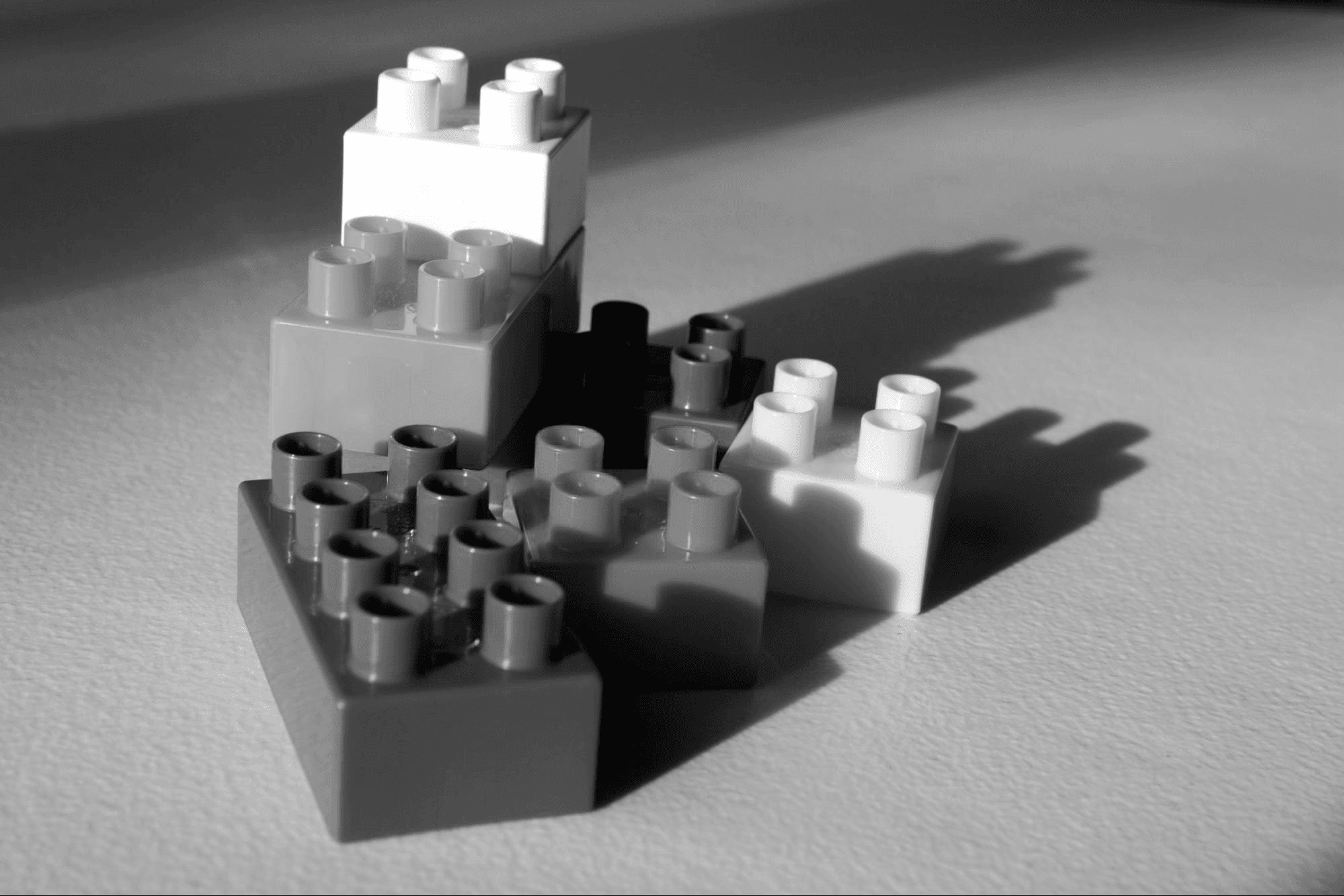
The act of building on someone else’s work is intrinsic to the Lego Group’s operating system. The various types of Lego bricks, while individual innovations in their respective industrial field, are often part of a larger concept. It’s this concept — a combination of artistic interpretation, commercial expansion, licensing, and simplicity — enabling the company an incredibly flexible brand identity. Point blank, Lego can perpetually profit off other’s creations directly in physical mediums. Granted, there are legal strings attached, however because the crux of Lego is replication, the content is a beneficiary of inevitability. Meaning the belief here revolves around the guarantee that our modern forms of physical entertainment will always exist in some form; Lego just simply needs to reproduce them.
Lego isn’t the only company who does this, they didn’t pioneer this idea, however they are one of the most overt examples of physical material rendition in the modern day. Lego’s work is not lazy, conceptually it’s genius. They understand the materialism of Western societies and occupy multiple business channels which drive commercial success. Lego is as much of a marketing agency as they are a craftsman, engineer, toy-maker, or other product themes. They have an aesthetic which is almost universally applicable to product mediums.
Once realized, this idea is obvious in nature and therefore may seem rudimentary or crude in application. The concept, however, of Lego’s success lying in the act of replication or reproduction is a strong position to consider for one’s approach to their respective company or brand. Brand identity is a convoluted field, yet the most important to consider for one’s longevity. Brands become trends when their selling point is built around logic made up of fleeting superficialities. The fleetingness of the product’s value exposes the logic as superfluous and it becomes lost in the next wave. Products like these often fall off or lose hype because the thing itself only occupies one domain.
The progression of a brand occupying multiple domains is partially due to the success of its product in its inceptual medium seeing it’s the infrastructure within the core idea that determines whether a product will have industrial flexibility. Older brands have the advantage of being the first, creating household names and simultaneously dominating market share. Initially, however, they were built around a flexible and innovative product concept. The last few words: “a flexible and innovative product concept,” is the general characterization of a brand identity that will determine the stretch of its agency once open.
The logic of material rendition widely saturates the clothing industry. Merchandising is intrinsic or commercially crucial to practically all forms of entertainment or establishment, an affiliation which makes it an impenetrable derivative of the clothing industry as a whole. While Lego can technically be considered merchandise, the association is not as clear because of Lego’s dominating brand identity and quality control. This is a good thing, implying Lego has created a desired standard and carved its role in material hierarchy.
Lego’s purpose in this series is to be a hybrid of a case study and ideology to, unironically, replicate or implement into one’s brand.